AMRs in Warehouses: How Autonomous Mobile Robots Are Changing Material Movement
Even a warehouse with lots of personnel can face one common challenge: transporting things from one location to another (and quickly).
Workers can take hours walking across warehouse floor space visiting storage locations, pick stations, packing zones, as well as loading areas. This wastes time that might be better spent on other priorities.
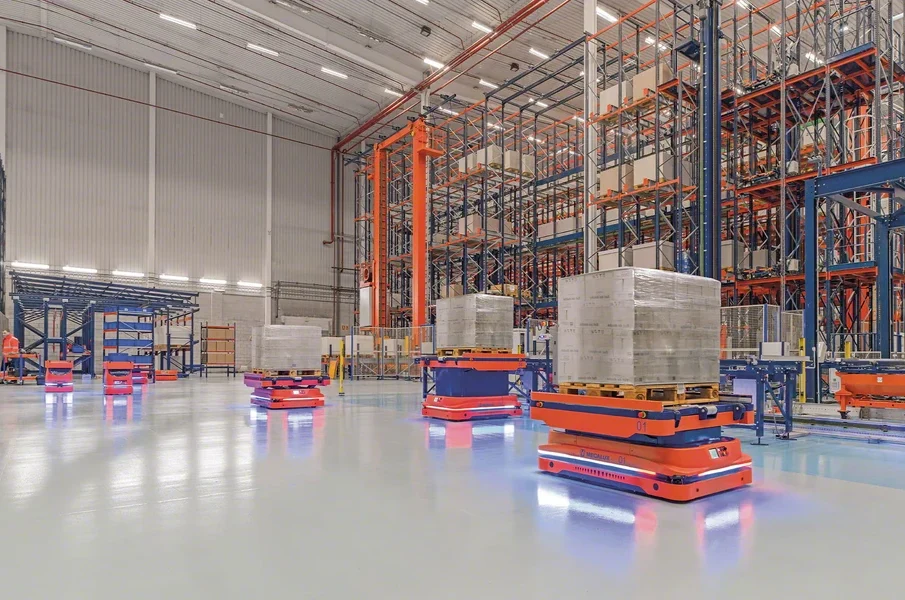
AMRs offer another approach. Autonomous mobiles robots that only require basic human involvement to move materials around a facility. They are becoming a viable alternative for businesses wanting to enhance warehouse movement without overhauling their operations.
What Exactly are AMRs?
AMR stands for Autonomous Mobile Robots. Unlike conventional automated equipment, which commonly adheres to set paths, and so-called mobile robots use sensors, cameras, software program, and mapping to navigate their environments.
They can detect if there is anything in their path, and adjust their course.
They can benefit specifically in active warehouses, where persons, gadgets, and merchandise keep moving on a regular basis.
A Typical Warehouse Task
Let’s say a people gets an on-demand service request to transfer a container from warehouse to packing station.
In a manual system, an employee may have to:
- Walk to the storage location.
- Collect the container.
- Move it across the facility.
- Drop it off at the station needed.
- You walk back and repeat the process.
The important point about AMRs is that the robot does most of the work moving between locations. Humans can load the robot, and then the robot transports goods to a designated location.
The worker can then be more productive with picking, checking, or other tasks.
Where AMRs Can Help Most?
The technology is especially beneficial for those who need to perform repetitive movement.
Common applications include:
- Moving picked orders
- Transporting bins and totes
- Supplying production lines
- Moving materials between workstations
- Supporting goods-to-person picking
Exact use depends on the facility and what kind of materials you are handling.
Why Flexibility Matters?
AMRs can operate in dynamic environments where layouts might change from time to time.
A warehouse might require additional storage racks, modified workstations, or the adjustment of production areas. Inefficiencies due to fixed automation. As mentioned above, whenever the layout changes major modifications may be required (fixed automation).
Autonomous robots can typically be programmed or mapped to operate in updated areas. This can allow them to be ideal for companies anticipating their operations to shift.
What Should Businesses Consider?
Companies must first review their real workflow before investing in AMRs.
Important factors include:
Floor plan, size of loads to be transported, distance for travel, order volume, safety standards, software integration, and growth later on.
A robot must fix an obvious practical problem. Simply purchasing automation because it is there is unlikely to yield useful output.
Practical Step of How-to Smarter Warehousing
Warehouse automation does not need to be an all or nothing process. Companies can start with a single but repetitive transport activity and then quantify the performance.
AMRs, when executed effectively with the right consideration, can lead to improved movement of goods around a warehouse (decreasing wasted walking) and support teams during spikes in order volumes.
But they get their real value by fitting automation into the current workflow, not re-engineering the entire operation to make it compatible with technology.





-
AMRs in Warehouses: How Autonomous Mobile Robots Are Changing Material Movement
Even a warehouse with lots of personnel can face one common challenge: ... -
-
-
-